Kakamega County, Kenya, Six-Month Report
The 20 women of this group are mostly all in their twenties and thirties and are all members of Amalemba Friends Church. There are single mothers, married women, widows, disabled women, and a few older women. The group was formed to promote the economic empowerment of women and children and to provide psycho-social support to both group members, church members, and vulnerable children in the community. They have a group project raising poultry and pigs, which made the group Ksh.38,200 (€253.69) in 2023. All of the women also have individual businesses, including poultry keeping, selling snacks and drinks, green groceries, hair salons, and tailoring.
After six months, the group reports that the project is going well. All 20 women have received first loans of Ksh.15,000 (€99.62), and all have repaid their loans in full. 8 women have taken second loans ranging from Ksh.5,000 (€33.21) to Ksh.20,000. (€132.82) The one challenge that the group has had is that the high cost of living has tempted some women to use their business money to manage their household expenses. This has cut down on their business profits because they aren’t investing enough in the business. The group leadership has tried to help the women by encouraging them to take short-term loans from the group emergency funds to help with household needs and not mix business and personal money. Each woman is required to contribute Ksh.200 (€1.33) in shares to the group savings fund and also Ksh.100 (€0.66) to the emergency fund each month, so they will have money to help with emergency needs and not have to dip into their business funds.
Partner Stories
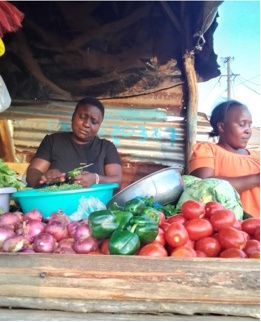
M. T.also runs a green grocery business. Previously, she didn’t have a business, but the RSWR fund enabled her to venture into business. She reports that her grocery is doing well.
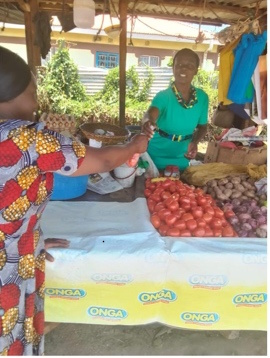
M. K. runs a green grocery. Previously, she worked as a maid for a hair salon. She wanted to start her own business, but her pay was so low she could not save enough. With a loan from the RSWR revolving loan fund, she was able to open her grocery business.
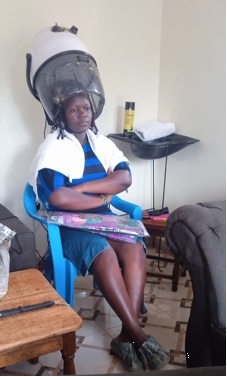
S.M. is a hair stylist. She used her loan from the RSWR fund to purchase a good-quality hair dryer. Once she has cleared her present loan, she hopes to take another one so she can open her own beauty shop, as she currently works from her home.
RSWR 6-month project reporting form, KENYA
What training did the women in your group receive?
Who facilitated the training? The women received training on business management, specifically record keeping, money circulationThe training was facilitated by Right Sharing of World Resources R.W.S.R
What date did you give your first loans?
12th July 2024 to 25th July 2024
How many women received first loans?
20 Women
How much did each woman receive?
15,000/= Each
How many women have repaid their first loans?
20 Women
How many women have received second loans so far?
8 Women
What is the amount of the second loan?
It varies from one applicant to another and it ranges from 5,000/= to 20,000/=
How many women have repaid their second loans?
They are not through with repaying the second loan. They have only repaid ¼ of the money and are on repayment of the money owed
Are there ways you changed the program from the initial plans?
No
What were the changes?
NONE
Have individual women faced any difficulties implementing their businesses?
Yes
What were some of the difficulties women faced in implementing their businesses?
Using the money derived from their businesses to support their families owing to increased cost of living/high cost of living and affecting the running of their businesses in terms of generating more profits.
What has the group done to assist the women who have had difficulties?
We offered flexible loan repayment period
We advised some women to change their businesses
We encouraged beneficiaries to apply for small-scale and flexible money from the group’s saving kitty to help them deal with emergency household needs rather than using business money to meet household needs, as this will kill their businesses if left unchecked.
How has the group embraced the revolving Loan Fund? (Willingness to take and repay loans)
The revolving loan fund model has been embraced by beneficiaries a great deal based on their willingness to borrow and repay notwithstanding the difficult economic challenges they are faced with.
Has the group had any difficulties in implementing Revolving Loan Fund program?
Yes
What difficulties has the group faced in implementing the program?High cost of living which has forced beneficiaries to use part of their business money to sustain their households and affecting the running of their businesses
Beneficiaries struggling to repay their loans in time.
How do you intend to remedy the difficulties?
Applying beneficiaries to apply for small and flexible loans which they can be able to repay quickly and be able to reborrow again to sustain their business enterprises.
Separating and respecting business money and not using it to manage household bills
Encouraging beneficiaries to use the group’s savings/emergency kitty to meet their needs
Do individual members save money for future business expansion, etc.? YES
Describe how your group helps the members save money for future emergency needs.
Members save part of their earnings and in return we gain interest which is shared at the end of the year then 20% of the savings is retained for emergency needs (dividends)
How much does each woman save each month?
As Share Savings 200/= Welfare/Emergency 100/=
Other comments:
The revolving loan fund initiative is a great idea in lifting poor women out of poverty together with their families. To sustain the initiative and make more women to benefit, regular training and mentoring women especially those with start up needs to be enhanced in order to make the program a success. Again the revolving loan fund kitty is separate from the share savings and emergency kitty.